The big brown cannon that sits on the cathedral green at Ely puzzles me. The plaque beside it says that it’s a captured Russian cannon from the Crimean war given to the people of Ely by Queen Victoria in 1860 in gratitude at the establishment of a new militia in the town. What is meant here by the term ‘the people’? Why was it placed so close to the cathedral? Was this heavy thing really moved around by men and horses? Did it kill many people? What can we understand from the inscription all around the rim of the plaque: GIVE PEACE IN OUR TIME O LORD. What influence might God have had over Lord Palmerston’s foreign policy? But the actual function of the cannon is clear from my frequent observations. It’s there so that the people, or mostly the people’s children can climb on it, making that corner of the green a single item adventure playground, and so that people can stand beside it or lean against it and have their picture taken, usually with the cathedral in the background.
The new militia, the Ely Volunteer Rifle Corps, was popular, until in 1890’s it was amalgamated with the Suffolk regiment and left the town. ‘For hundreds of farm labourers and others the annual training wa looked upon as their holiday, while the Christmas bounty meant the provision of comfort for the festive season…. Many a militiaman makes the service boots he receives for each training serve him for the rest of the year and the same applies to the underclothing provided.’ from the Ely Guardian. (Note the importance of underpants in sustaining the British Empire.) About 200 men gathered every year for training and were billeted in the city, and each householder received fourpence a night for each man. ‘The militia had a band, of course, which ‘added much to the ceremonial and social life of the town. While the men could prove a problem at times after having drunk too much, the officers proved very poplar with the young ladies of the town.’
Astonishingly, 1400 cannons were taken from Sebastopol; presumably many were melted down but some were sent to 146 towns and cities in Britain, which at that time included the whole of Ireland. 23 were distributed across the empire, including 10 in Ontario.
Three 17th century church bells from Sebastopol were brought back to England and now reside in Arundel castle, where photos in Wikipedia show them in enforced silence sitting on what looks like a marble platform within a sculpted niche in gothic style.
Other, larger bells from the church of the Twelve Holy Apostles were taken to the barracks at Aldershot . One bell hangs at Windsor Castle, where it is only rung on the death of a monarch.
it is difficult to draw a distinction between trophies and loot. In 1907 an Article of the Hague Convention stated that:
The property of municipalities, that of institutions dedicated to religion, charity and education, the arts and sciences, even when State property, shall be treated as private property.All seizure of, destruction or wilful damage done to institutions of this character, historic monuments, works of art and science, is forbidden, and should be made the subject of legal proceedings.
However, the article was ‘not much respected’ during the remainder of the century.
Public opinion in Britain was outraged at the failures and disasters of the Crimean campaign. Cholera and typhoid – stuck in the snow – all the transport horses dead – no winter clothing (no new boots or underpants) – little to eat. Parliamentary investigations demonstrated the army’s failures and newspapers demanded drastic reforms. The aristocratic leadership of the army blocked all serious change. No one was punished. Lord Aberdeen was forced to resign as prime minister, the follies of the war’s conduct having been brought to the nation by the first on-the-spot war correspondent, William Howard Russell, his reports sent to London by telegraph. Aberdeen was replaced by Lord Palmerston, more efficient and a more zealous imperialist. The absurd and deadly charge of the light brigade came to be remembered for the heroism of its troops, and the suffering and deaths of thousands of soldiers – more from disease than in combat – came to be remembered for the tender ministrations and health care reforms of Florence Nightingale and Mary Seacole. Twenty years later Russia had re-established its strong naval presence in the Black Sea, and rebuilt Sebastopol as a naval base. The real changes brought about by the war were technological. Peto, the great British railway entrepreneur, had a railway line built, after the disasters of the first winter, to carry allied equipment across Crimea to the siege of Sebastopol. A few years earlier he had been responsible for the new railway across the fens to Ely, and no doubt it was along this line that the Ely cannon travelled.
Little attention was given to the question of why the war was fought in the first place, and the quarrels of the imperialist powers for control of the Black Sea and access to the mediterranean soon ceased to interest the British: in 1857, just after the end of the war in Crimea the first Indian war of independence (still generally referred to in this country as the Indian mutiny) broke out, and became a focus for patriotic passion and renewed military enthusiasm.
Here are the numbers of deaths:
Turkey: 21,000 in combat, 24,500 from sickness and disease; France: 20,000 and 75,000; Britain: 4,600 and 17,500; Russia: 73,000 and 377,000.
What was it all about? The pretext was a squabble over which european power should be the dominant protector of christian churches in the Holy Land, which was part of the Ottoman empire, France, representing the catholic church, or Russia, for the orthodox. The real reason was that France and Britain were apprehensive about the extension of Russian power, as the Ottoman empire grew weaker, into the Black Sea and thence into the Mediterranean. So for the time being an alliance with their old enemy against the Russians made sense. The fight against the ottomans would be resumed later.
I agree whole heartedly with those Tories who say that not enough British history is taught in schools.
June 25. got up at 5, glorious morning on the green, brilliant light on the cathedral. Thinking again about the Cannon and the process by which it came here I went over to take another photo, and found that the inscription has been thoroughly smashed, even the concrete rim of the plaque which held the brass lettering. It seemed to me that this destructive diligence could not be attributed to the legendary ‘mindless vandals’, but had to be the labour – very noisy labour – of political commitment. A Cambridgeshire cadre of revolutionary teenagers! But then someone suggested it had been stolen for scrap and that suddenly seemed much more likely. That reminds me that the grateful citizens of Halifax are said to have sold their cannons – they were presented with three of them – for scrap. And many more were melted down during the second world war, which means they might well have been returned to Russia.
Near a sign with the mantra Ely, where medieval meets modern, heavy, immaculate cars are parked on double yellow lines obscuring a silent half- timbered house with dusty pelargoniums trapped in the windows which bears the date 1550. Every day. There are no traffic wardens. This is the war against the war against motorists. They could park the cannon on some double yellow lines. that would look great and be a real political statement. Nothing connects medieval and modern more closely than a big piece of Tsarist artillery.
First the high electronically controlled gates slowly swing open then a stooped, whitehaired, whitesuited old man walks slowly out, my dog runs up to greet him and he waves his stick in greeting to me. Safely behind the high walls of his enormous garden lives a flock of goldfinches. I now recognise their twittering. (Thanks to the Merlin bird song app.) I’ve only glimpsed one once, I’ve only seen the old man two or three times.
A few minutes later he returns along the path through the green, in the shadow of his wall, holding what must be the Daily Telegraph – but I remind myself that that is only an assumption. I haven’t yet spoken to him about his goldfinches. The Union Jack flaps or droops from his highest chimney.
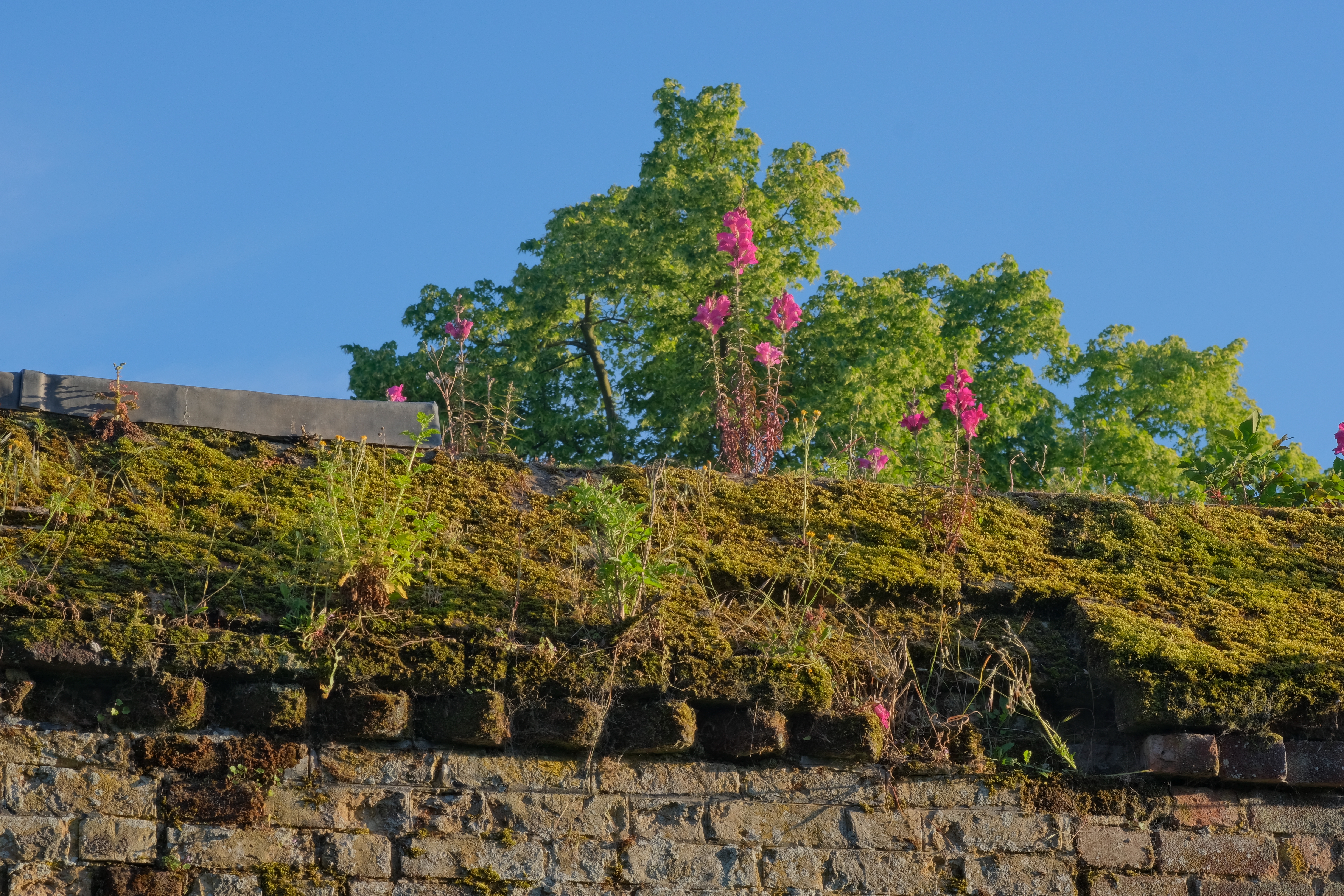
Here I am in Ely, the nearest to a perfect simulacrum of a stable, patriotic dream that you can imagine. It’s created by the merger of medieval monastic buildings with wealthy private school, financed in part by pupils from China, the children of rich communist party members and officials. Many range rovers, volvos, bmw’s, mercedes and other clean and powerful military-style vehicles quietly cruise the streets. Last night a concert was given in the recital hall of the school by a highly gifted trio of teenagers, cello, piano and flute. The flautist, who wore a full length, bare-backed red dress is about to go to the Royal College of Music, the pianist, with bow tie and wing collar, has an organ scholarship from Queen’s College Cambridge, and the brilliant and assured cellist, who still wears a dental brace and between bars would fiddle with the floppy strap of the uncomfortably fussy fancy long red dress she was wearing, she is going to Gonville and Caius College to study Anglo-Saxon, Norse and Celtic. They had laid out cafe style tables covered in red drapes, with some kind of artificial candles, lit by batteries I suppose, and the event was so intended for insiders – pupils, teachers, friends and parents – that no one asked to see the free online ticket which I had reserved, everybody else was at home there, and it was so peaceful that during the concert two doors leading outside were left open – no extraneous sound came in. The conservatives keep invoking the idea of stability, and here it was, in the Isle of Ely, a relaxed, unthreatened stability, and with it a perfect sense of entitlement. The architecture of tithe barn, almonry, infirmary, deanery, chantry, bishop’s palace (former) and current bishop’s house, the queen’s hall, priory, pilgrims’ hostel and the great gateway which still colloquially goes by its latin name, the Porta, all these and more are said to constitute the biggest collection of former monastic and ecclesiastic buildings still in use in all of Europe, and all the conversions and adaptations and renovations and additions, the new chimneys from the 18th century, the new windows from the 17th century, the gothic arches now blocked up, the massive buttresses added for support, the walls of variously coloured bricks and stone some of which incorporate ancient pillars, not to mention the pretty and well tended gardens between them enclosed by their own walls where white and deep red snapdragons grow along with myriad little mats of ivy-leaved toadflax, and the glorious sloping park of Cherry Hill, creating a gentle sylvan setting for the cathedral with a rough meadow on one side with grazing cattle where the occasional deer runs from my dog; all of this acts out a dream of England. Visitors often point out that the towers of the south west transept are leaning, as if they want to believe in the instabilty of the whole structure, as if, quite reasonably, they can’t quite believe what they’re seeing, but to me the divergence from the perpendicular seems trivial. It could have been added for a touch of wayward charm, like Morrison’s supposedly ‘wonky’ carrots.
In this part of the world so many people dream of England that in the next constituency Liz Truss has a majority of 26,000. Of course it’s actually the least stable part of the country; in a few years time large areas could be permanently flooded. It won’t look very conservative then.
William Davies says in an essay in the current LRB that after the turmoil of Truss the Tories chose, not stability but torpor. Sunak and Starmer are noisily competing to promise less than the other: fully costed, fully funded no change.
A few weeks ago I wrote this: today great jubilation over Sunak’s D Day mistake, shameless hypocritical lecturing from everybody else. the bbc even found a 102 year old veteran to condemn him. He had gone home early, to an itv studio, to defend his abusive lies about labour’s planned tax rises, putting party before nation, leaving Starmer waving the flag in France.
The story used to be that the Soviet Union had saved Britain from Nazi invasion, as Hitler concentrated his forces on the assault on Russia. In what feels like another shift in alliances what we hear now is that d day saved western europe from communism, we were saving Germany, not defeating it.
In the window of Topping’s, ‘East Anglia’s biggest independent bookshop’ (though these days that’s like saying that I’m London’s biggest independent jam manufacturer), signed by the author, is a book called How Stalin Won the War. Now what independent spirit, what subversive, unpatriotic historian wrote that, do you think? It was Jonathan Dimbleby.
If there was a turning point in the second world war it was surely the surrender of the Germans at Stalingrad, a year and a half before D Day, in the winter of 1942-3, or even their failure to capture Moscow in January 1941, at the end of their triumphant sweep across Ukraine and Russia, or a third possibility might be the German defeat in the huge battle of Kursk, in the summer of 1943. There were more Soviet casualties in that battle than there were British casualties in the whole of the war.
Ely pigeons: heroic vanguard in the War Against Motorists
Snapdragons on the garden wall of the old Bishop’s Palace



 like a little black book
Beautiful writing Jonathan, thank you
xxx
Sent from my iPad