Since I looked up the new exchange rate for the Swiss franc I hesitate to recommend a walk in Switzerland, but still, this is a fabulous walk and there’s a good story to it.
You can get the Eurostar to Paris and then from the Gare de Lyon a TGV to Lausanne, by Lake Geneva. Change there onto one of the frequent trains that go up the Rhone valley and get off at Bex. (If you care, the ‘x’ is silent, it’s pronounced ‘Bé’.) Here you can spend the night. Then a bus will take you a few kilometres up to Les Plans sur Bex and from there it’s just a stroll for half an hour to the end of the road and the Auberge du Pont de Nant.
The end of the road is often a good place to stay in the Alps: easy to get to and the threshold for delightful places. The auberge has a dormitory as well as rooms and serves excellent food, in fact when I was there although the restaurant and bar were often busy hardly anybody else was staying and the evenings were very peaceful. More or less next door is a well known alpine botanical garden which was quite neglected at the time, and I wondered if it had been built too close to the shade of big spruce trees, or maybe it was old enough for the trees to have been very small at the time or even not there at all. And it was there that I saw for the first time how the pretty little Erinus alpinus, which isn’t actually that common in the wild, can become an annoying weed in a rockery. It had made itself at home and multiplied gaily, colonising cracks and crevices and banks of scree.
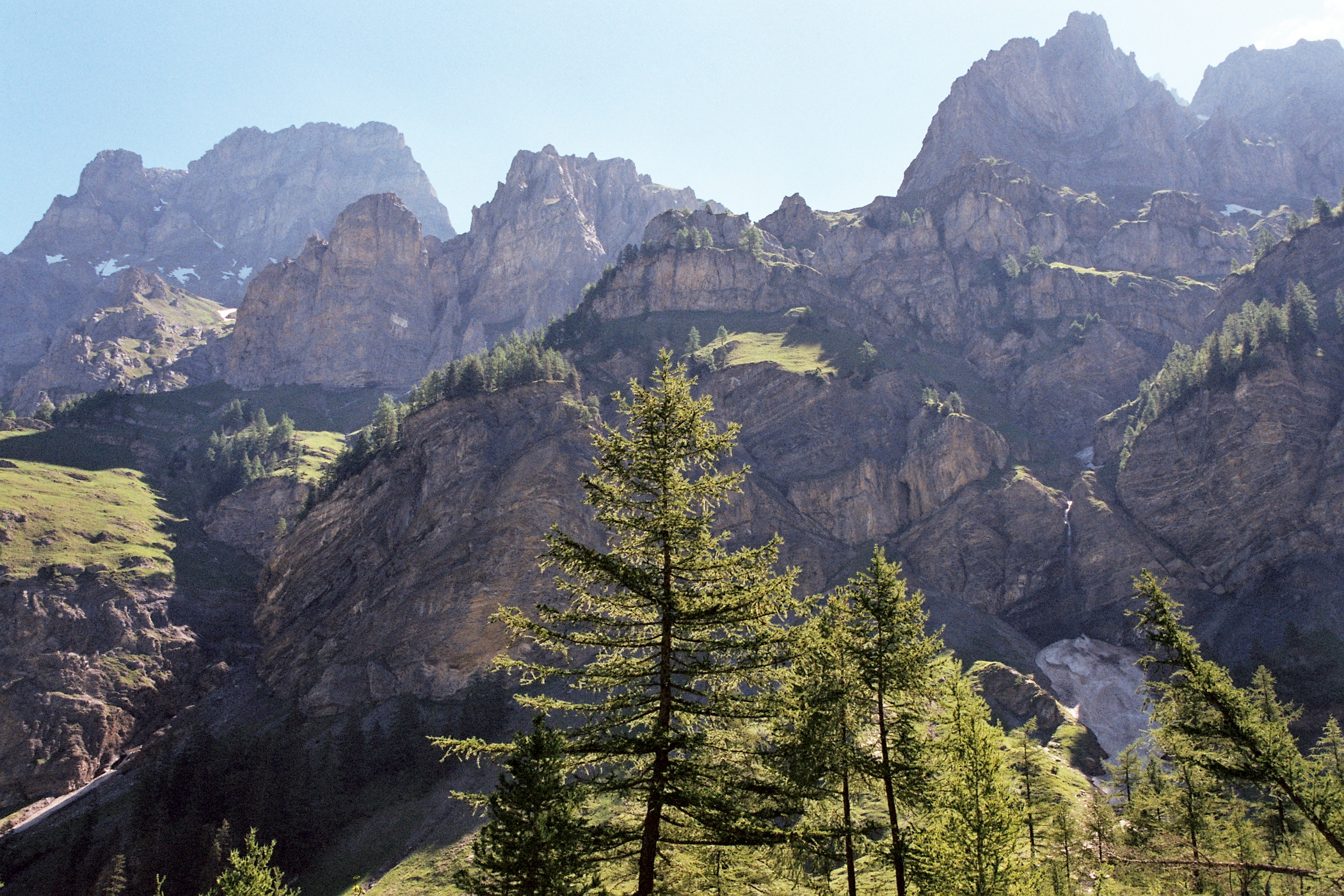
The walk. Firstly I was led gently up to the vallon de Nant through flowery woods. One time I met some cows coming back down who waded or paddled slowly through the flowers and grass; I thought they must crush them, but as if they were walking through water the vegetation parted before them and afterwards appeared undisturbed. An ideal moment in a landscape where nothing could go wrong. Then quite suddenly you find yourself at the edge of the woods with a wide prospect of the valley, its broad meadows with thousands of globe flowers ending quite abruptly at limestone cliffs and peaks of various colours and bold stratification and at the far end steep slopes where thick snow still lay. After walking through the meadows towards the head of the valley I crossed the shallow stream into a copse of small larches which looked as if they had been hit by bombs, patches like craters with smashed branches and shattered trunks: they must have been hit by bouncing bombs, great rocks which had come leaping down the mountain side in an avalanche, smashing one tree and flying over others. The younger the mountains the more unstable and violent they are. Here on a peaceful day in spring the evidence of winter’s dramatic erosion was preserved. In mountains even younger than the Alps the pace of change can be frenetic: in the himalayas vast movements of earth and rock take place every summer. In our ancient British highlands such drama is rare. On the slopes above soldanellas, seeming as delicate as paper flowers, were beginning to push through melting patches of snow and purple saxifrages rooted into the cracks of a big bare rock. I remember my giant striding scarecrow shadow against the snow, lengthening as the afternoon came on. It gave me the pride that comes before a fall. On my way back I found that the little stream had swollen and flowed over its boundaries, so that ribbons and pools of water stretched almost playfully across a good ten metres of stony ground. This was due to a phenomenon I had forgotten about: the stream was fed by snow melt, so in the morning after a frosty night on the mountains it was just a trickle, but in the afternoon on a sunny day a flood of icy water poured down. I began to paddle across; in places the water barely covered the stony bed, in others streams ran deep and fast. To be on the safe side in this place of threatening drama I took off my boots to keep them dry and in case I should slip and fall I thought to throw them onto the bank on the far side. I swung them by the laces and sent them in an arc; they hit the bank and fell back into the river and floated quickly off – towards Lake Geneva, towards the river Rhone, towards the mediterranean. I scrambled to the bank and followed them but couldn’t keep up and soon they disappeared. This was my own little contribution to the violence and instability of the mountains on that sunny afternoon. It was about three kilometres back to the guest house on sharp stones, with some sweet turf for respite. Day trippers were still sitting on the terrace outside the guesthouse drinking beer or coffee, eating cake, indifferent to all the excitements of the day: cows wading through flowers, trees broken by avalanche, snow cracked open by soldanellas, the flooding of the quiet narrow stream, the adventurous boots. I pretended nonchalance and didn’t look at them to see if they looked at me and my bare feet.
This is what can happen on an easy walk. This is how a grade two or three can in a moment turn into a five or six or worse. And anyway, you’re better off keeping your boots on and getting wet feet because barefoot you’re likely to slip and fall.
From the auberge there are plenty of other walks, easy and adventurous – or, like this one, both. And it’s a stage on the circular Tour du Muverans, a demanding five day circuit through dramatic dolomitic peaks not well known and so not at all crowded. The vallon de Nant is famous for the rich variety of its alpine plants. When I was there at the end of June, a good time for flowers, I could walk all day and maybe see one or two people. In places there were still deep patches of snow, and although I was able to borrow a pair of trainers from the guy who ran the guesthouse – luckily we had exactly the same size feet – I had to be careful where I trod. It was on the very first day that I lost my boots.
the Vallon de Nant: from the pastoral to the sublime to the ridiculous:
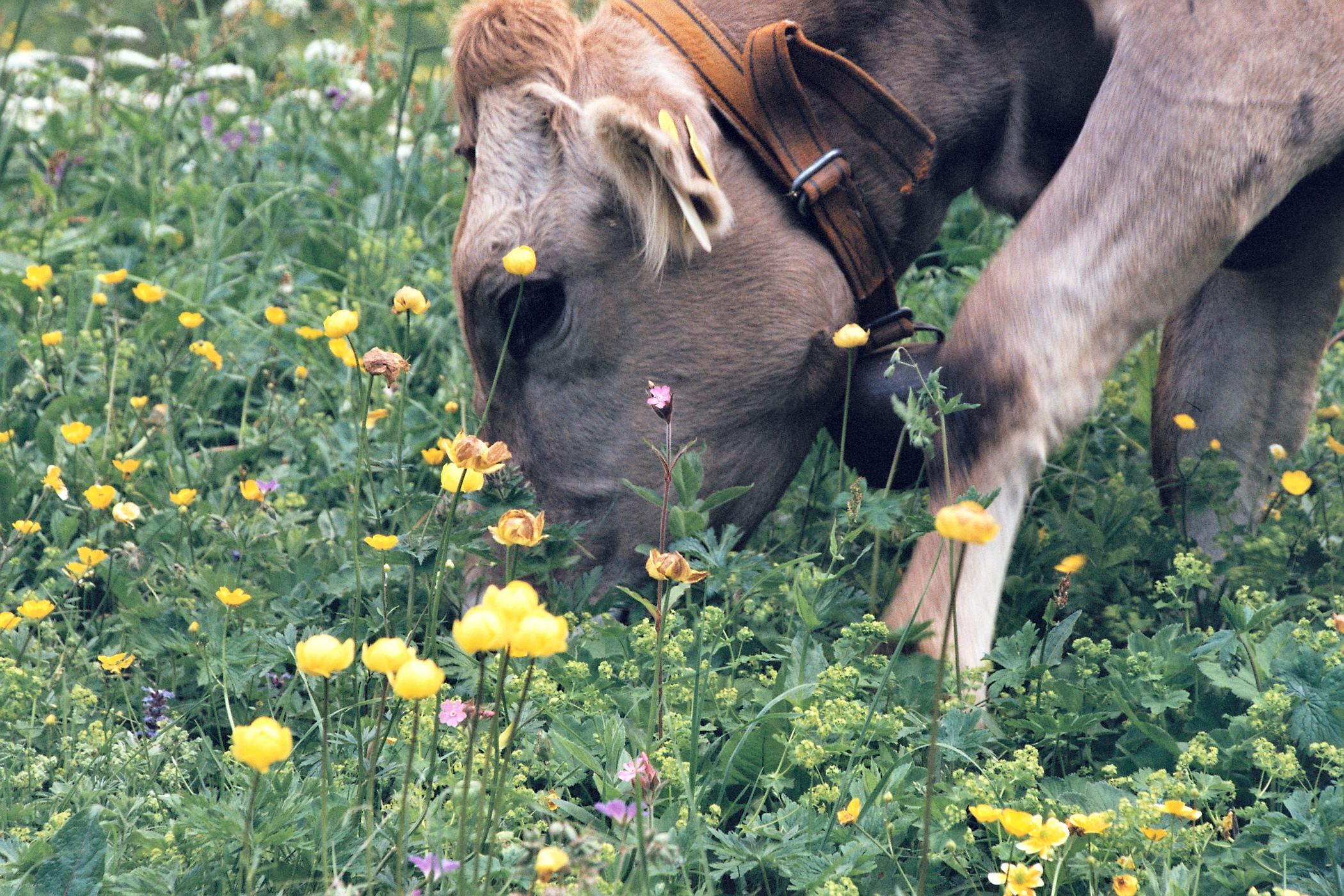
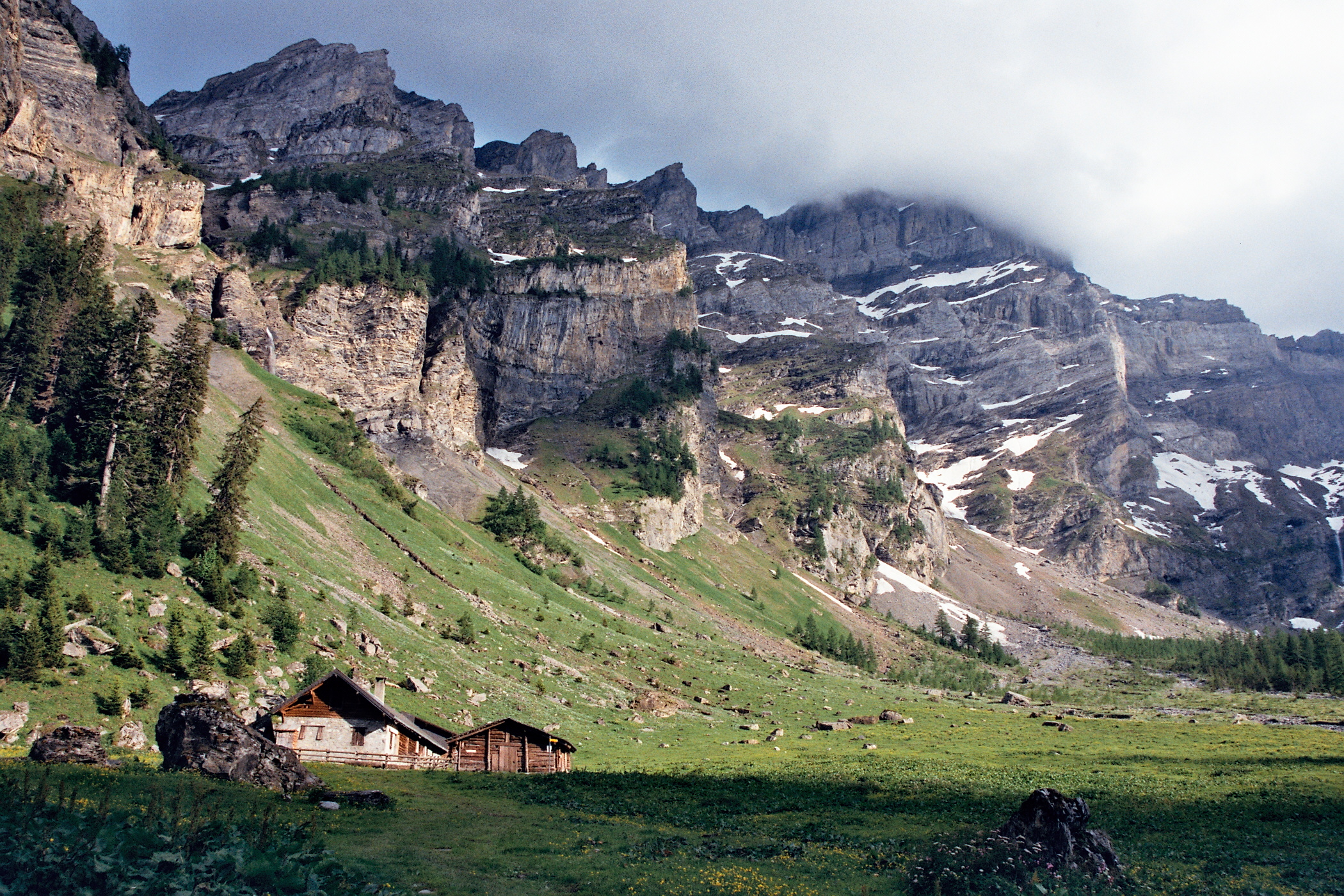

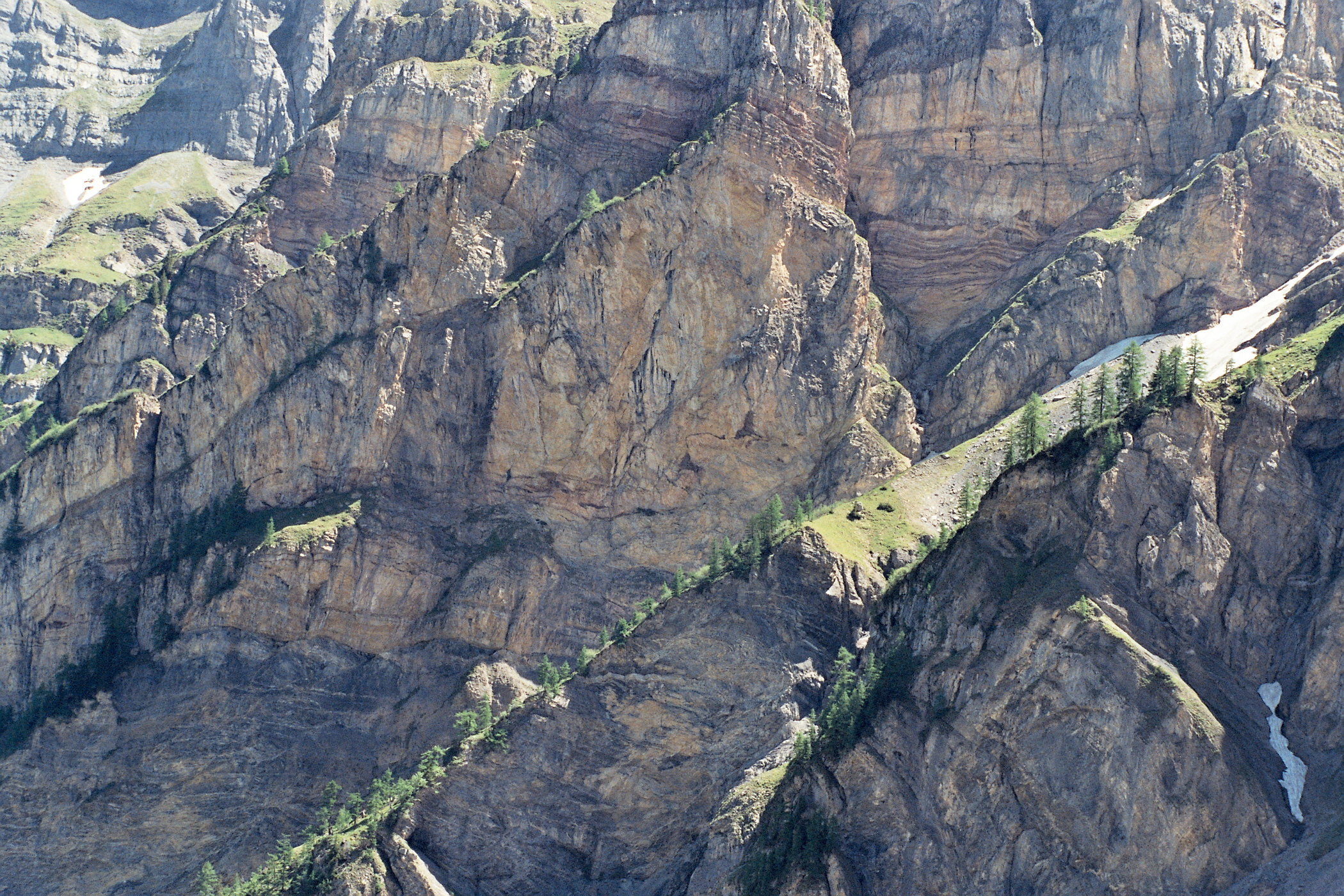


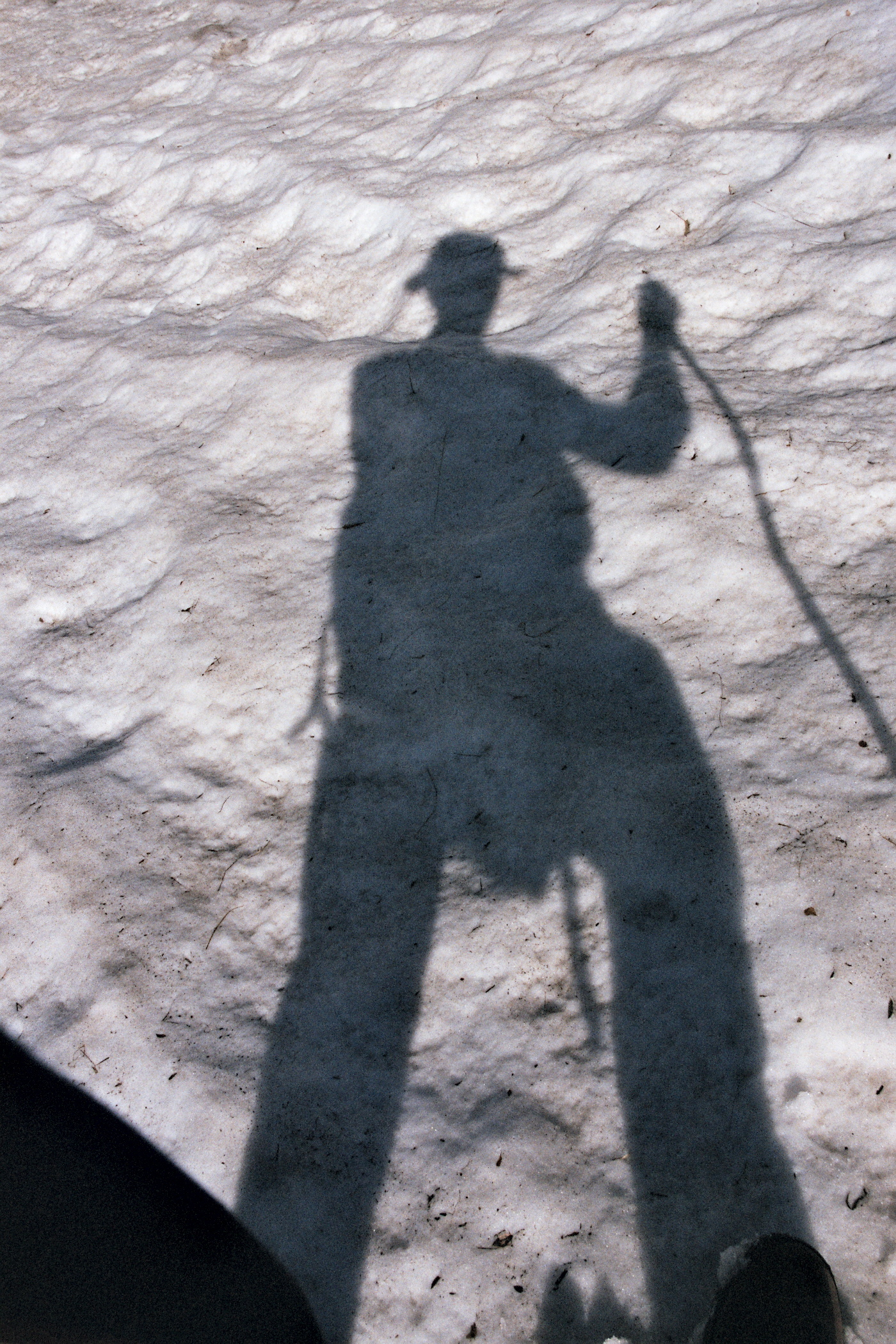
Hubris. Was I encouraged by the chamois? Big legs, tiny head. Not a good combination.
And, from anothr day, I think it was on this trip that I first saw one of my favourite alpine flowers, Thlaspi rotundifolium, aka alpine penny cress:

I sometimes get fussy with cropping photos, moving in to show the flowers in more detail, moving out again to show the rocks, the habitat, never quite satisfied. Trying to have everything.
Another footnote: notice how the valley has a welsh name! Celts were here. The name means valley of Valley. It’s like those river Avons in England which mean river River.


 like a little black book