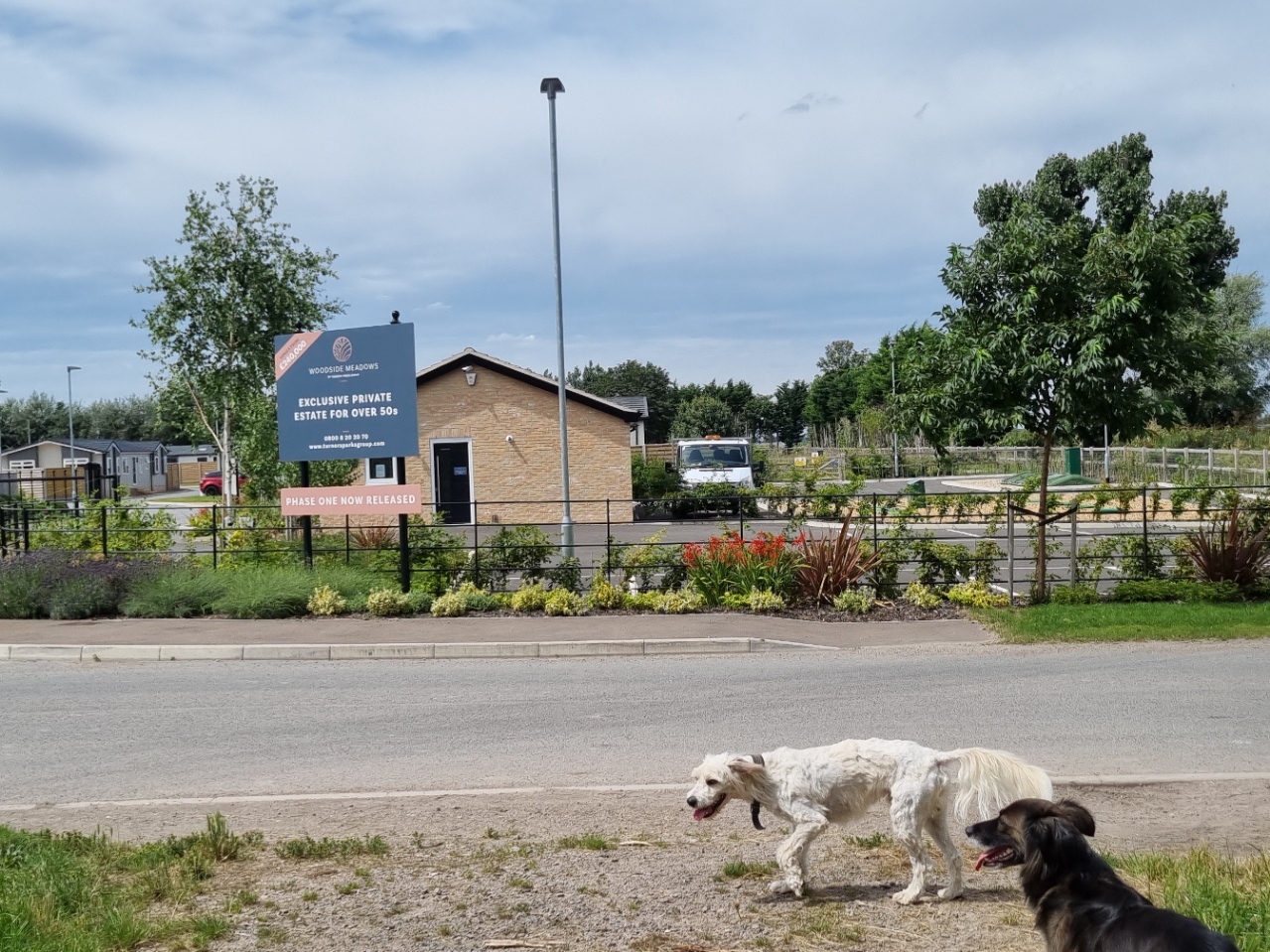
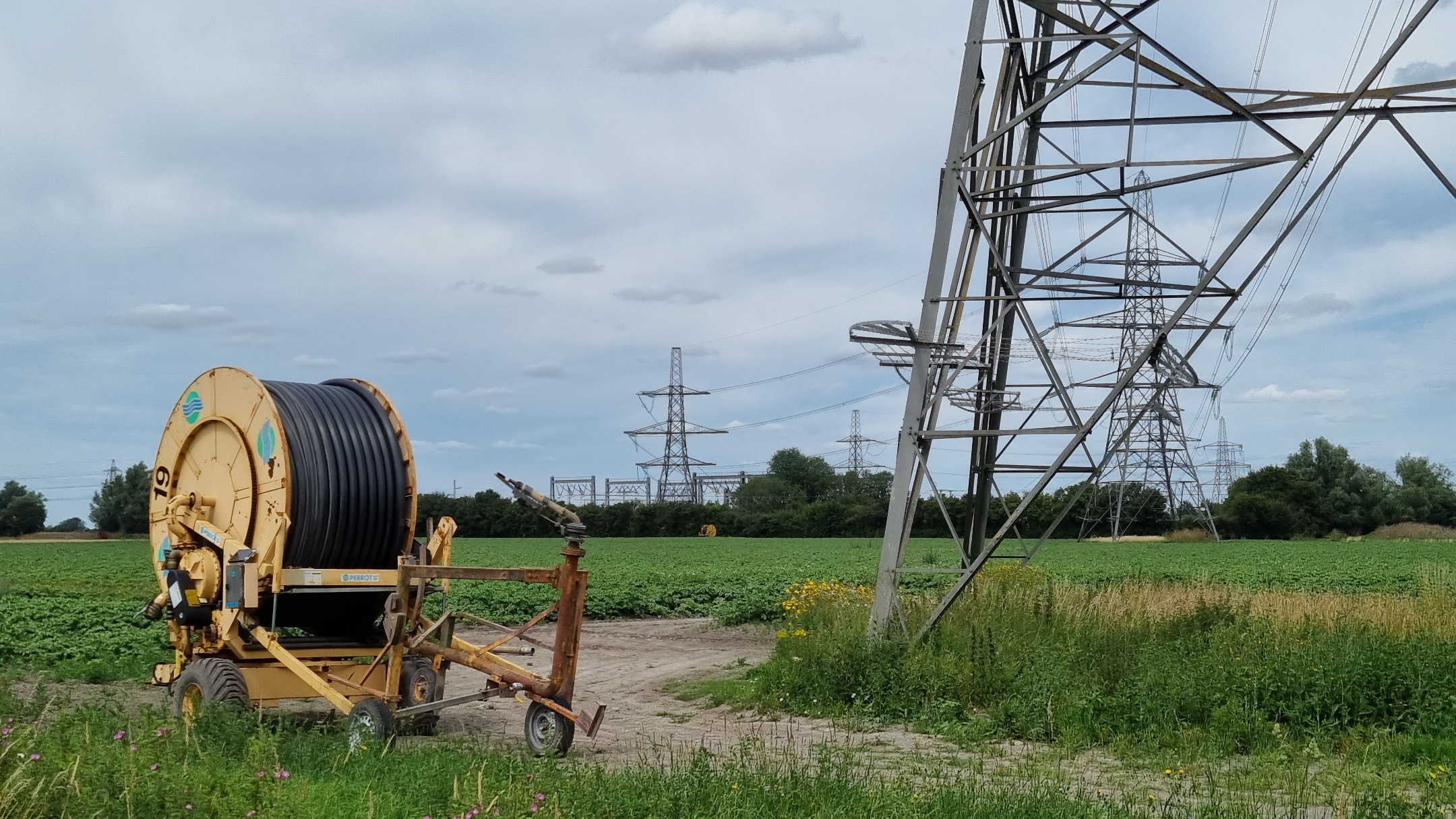
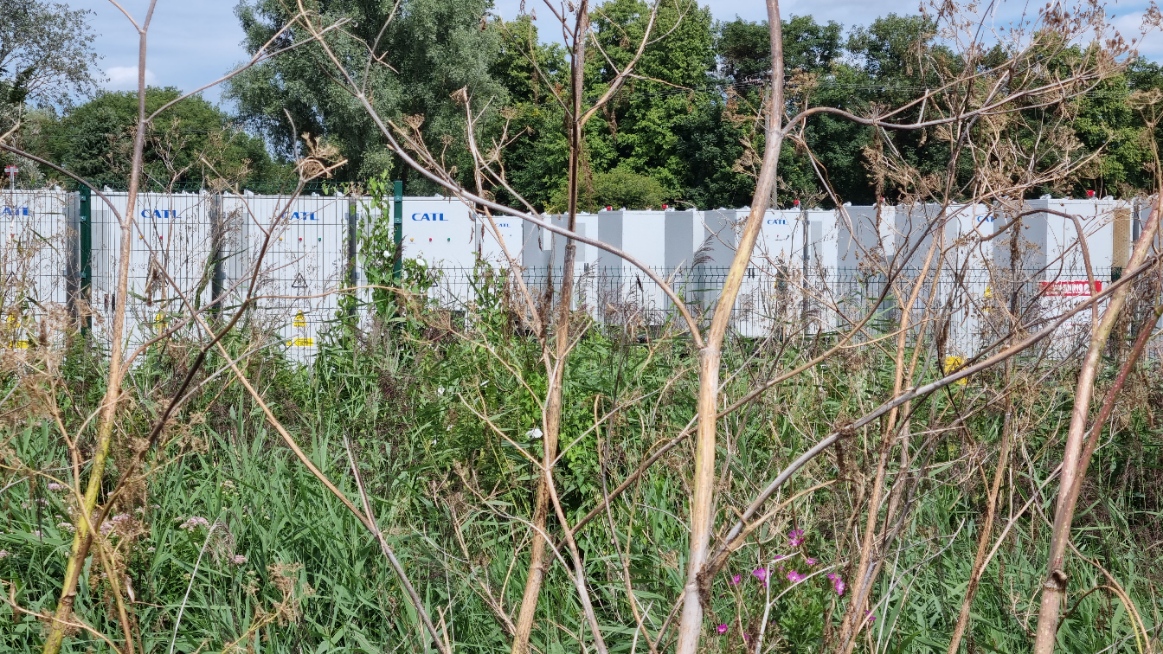
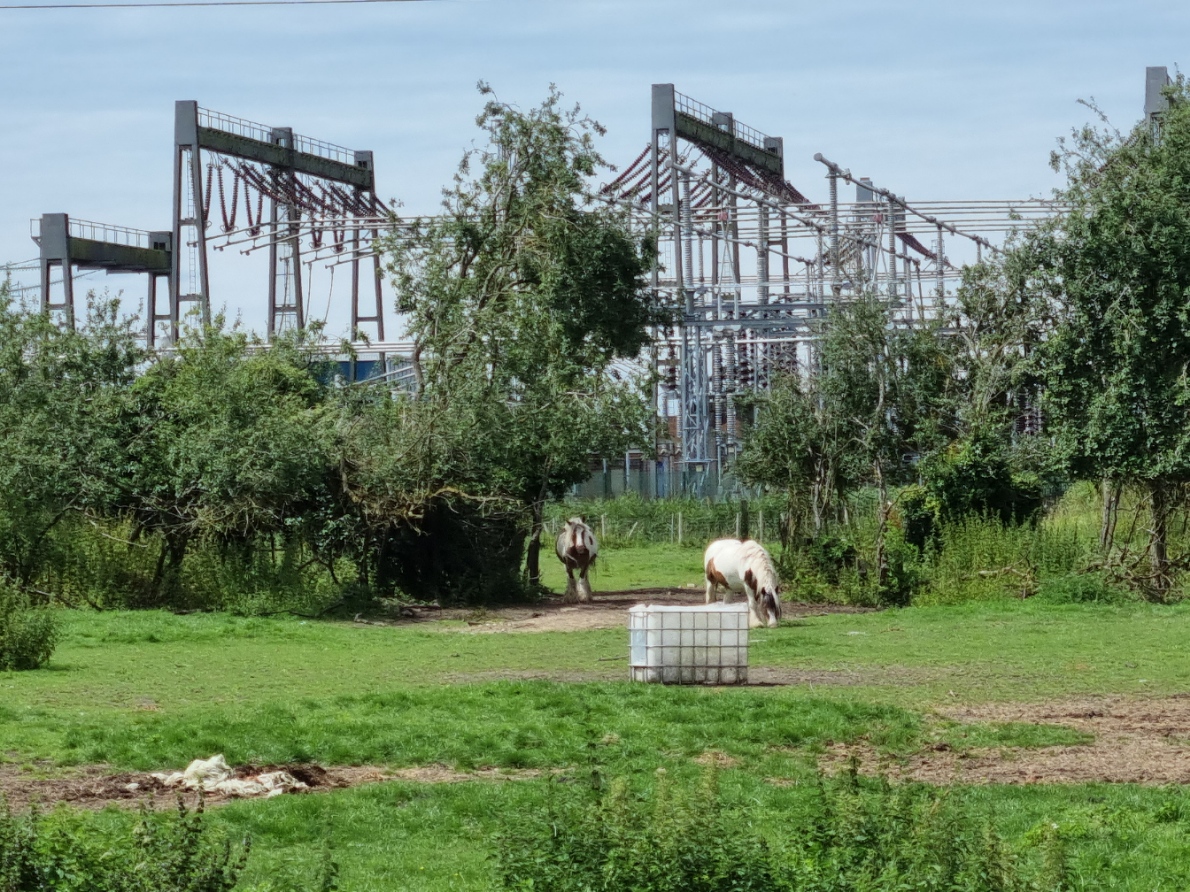
On the edge of the low chalk hills around Newmarket, just a few feet above sea level, just a few feet above the fens, just about safe from floods, lies a string of villages. Burwell is one. It used to be a prosperous port. Like other edge of fen villages it stretches in a long ribbon following the old shore. Paths and lanes lead out at right angles into a strange periphery, strange for those unfamiliar with this part of the world, the piecemeal development of a vanished urban structure on the edge of a vanished shore: patches of young woodland, rough meadow on the site of an old castle, every last stone taken away, bold little groups of new houses, a skateboard park, an unhappy community orchard, lots of public footpath signs, a plaque which announces the site of the common hithe, an inlet which served the wharfs and warehouses of North street from the 1400’s until the early 1900’s. Then you come to a lane which winds along the edge of the fens themselves, almost deserted on a sunny sunday afternoon in July. Pylons lead to and from the dazzling sculpture of an electricity transmission sub station. Irrigation hose reels 12 feet high wait in corners. A development of bungalows exclusively for the over 50’s behind electronic gates which recognise the number plates of registered vehicles announces the opening of its first stage. A hundred acres of superbly lush and vigorous potatoes are in flower. Several quiet horses graze in small meadows yellow with ragwort. An american-military style pick up has been granted admission to the housing estate and the gates slide quietly shut behind it. At a field gate a tired sign says Say No To Sunnica. I hear a humming, electrical but also like rushing water, and come to a collection of white boxes, each the size of a small car, partly hidden behind tall dead stalks of deadly hemlock – which forms a virtual monoculture by roadsides and field edges round here – with the letters CATL printed on each one. Behind me I hear the fast approach of a fire engine, me and the dogs get up onto the verge and as it passes an officer in the passenger seat waves to me in acknowledgement. As I pass a track which leads in a dead straight line between willow trees out into the fens the little cloud of dust in the distance indicates the passage of the fire engine. I meet the first and only people, apart from the man glimpsed in the fire engine, a young couple evidently out for a walk. I ask them if they know what Sunnica is? She says, I’ve seen about it on Facebook but I don’t really know what it is. She tells me that just round the corner a right turn will take me back into the village. I like the idea that you might see words on facebook without actually reading them. Then a path parallel to the high street takes me, through groups of new houses, between high garden fences, along an old lane, through a little park with a children’s playground, past the site of the castle with its already yellowed grasses to the church at the far end of the village. The largely 15th century church is grand and beautiful, a reflection of Burwell’s wealth as a trading port although forty miles from the sea, with some extraordinary carvings on the roof which make your neck ache. One celebrated image shows a monkey with a flask. This is a satire against apothecaries, the idea being that the monkey is selling its own piss.
Later I googled Sunnica . A plan is afoot to build a solar farm in the fens, between Newmarket, Soham and Burwell. Sometimes you pass a solar farm (why farm?) on the train or while driving and you think, being naïve, wow! so many panels! But they are all tiny, mere solar smallholdings. This one will cover 2,700 acres, and I’ve googled that too, to change it to the nation’s favourite standard of measurement: it’s more than 5,400 football pitches. As well as the panels themselves, there will be big developments at the Burwell electricity sub-station, and many new pylons.
I asked a couple of other local people if they knew about Sunnica. One knew nothing about it, the other thought it might be to do with sewage.
Sunnica is a Spanish company. Their proposal is already seven years old. Is that why most local people seem to know so little about it? It’s been around so long that people had stopped worrying about it, it seemed that after all nothing would happen? Stages one or two of the public consultation process took place in 2018. That didn’t go well. The company was accused of being out of touch, distant, indifferent to the concerns of local people. Various Tory ministers procrastinated. Since a development on this scale is classed as a national infrastructure project, the government can overrule local objections. But Michael Gove was spared angering the local Tory authorities by the election. Ed Miliband gave it provisional consent a week after the election.
And CATL is a chinese company that makes batteries. Big batteries. So at Burwell the future has arrived already. But no one has told the people. Or if they had, most of them weren’t paying attention. On the other hand it could be said that most of the people who live in the fens now are themselves the fiuture.
I thought I would drive back to Ely a different way. But the OS map lied. it showed a thin yellow line, meaning ‘road generally less than four metres wide’. and this being a country which still thinks of itself as civilised, as having something loftily referred to as an ‘infrastructure’, the word road implies what John Richards, in his book of mountain flowers walks in Greece usefully refers to as a ‘sealed surface’, a solid barrier against sand, mud, rock, an insulation against natural forces, against whatever dangers might lie below, but in this case the infrastructure really was the underlying structure, squidgy peat, what’s left of it after the draining of the fens, which causes the minor roads in these parts to bend and buckle, and transforms the road surface lapping waves. At first it’s fun, a theme park anticipation of the invading seas; take it at about ten miles an hour and the car rides up and down quite nicely. But soon the waves break, the road began to burst open, the surface heaved, crumbled and lurched, revealing several successive attempts to establish a solid, sealed carriageway, lumpy concrete coming through the tarmac like crusty wholemeal rising. And being much less than 4 metres wide, with dykes on both sides – in the north a dyke is a wall, here it’s a ditch – there was no room to turn round; I was trapped and dependent on a car which had ‘left its comfort zone’, which felt like a dinghy on the rocks, in an uninhabited place. Have you noticed that almost everybody who is killed in a storm is in a car? Blind faith. They drive into floods and are swept away or else a tree falls and crushes them.
I made it though. Only scraped the bottom of the car a couple of times. That road turned out to follow the beginning of the route boats took from Burwell, across the fens to the river Cam, then into the Ouse near Ely and on to the sea at Wisbech. And I realised that although the roads look the same on the map, there had been a junction where you could go either way to Ely, but only one way was indicated by a road sign. I had taken the road less travelled. The unsignposted road is the one they’ve given up on, it’s now only fit for 4 x 4’s and tractors. Near the beginning there was a travellers’ camp by the roadside, an indication maybe that I was leaving the respectable world and its infrastructures behind.



 like a little black book